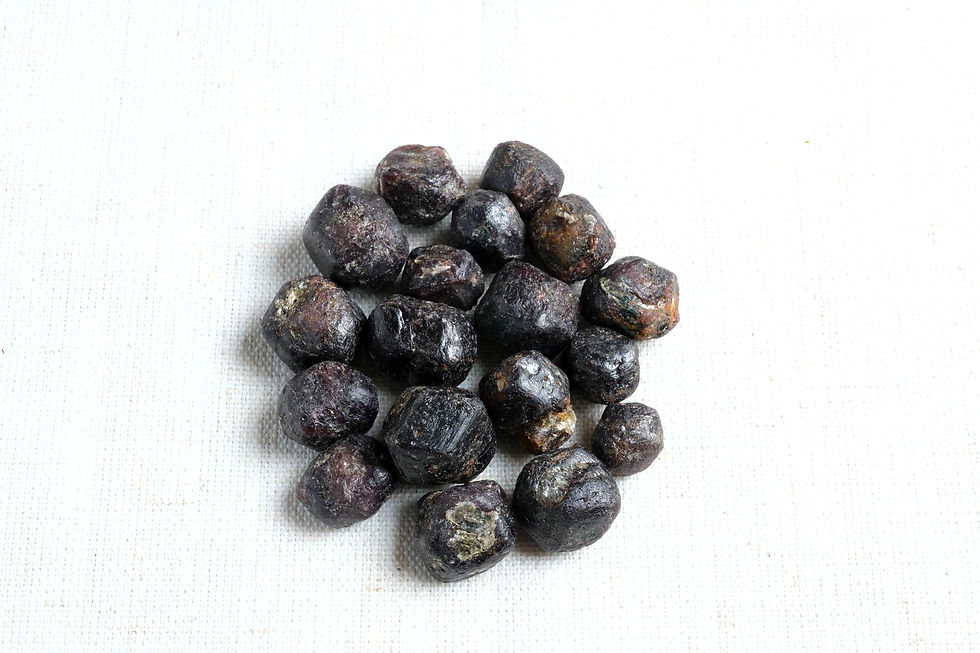
Turgite
This specimen is a spectacular display of the iridescent potential of iron oxides. Turgite is not a singular mineral species in the strictest sense, but rather a structural blend of hematite and goethite. It forms when these iron minerals undergo a specific type of alteration, often in the presence of water. This results in a thin, microscopic layer on the surface of the mineral that creates a vivid, rainbow-like play of light.
The mesmerizing colors you see—ranging from deep purples and electric blues to fiery golds—are not caused by pigment, but by a phenomenon known as thin-film interference. This is the same optical effect seen in oil slicks on water. As light hits the microscopic layers of the turgite surface, it bounces back at different wavelengths, producing a permanent spectrum of color that contrasts beautifully with the dark, earthy base of the iron ore.
Turgite often grows in botryoidal or mammillary shapes, which look like rounded, bubbling masses. These shapes form as the iron-rich solutions slowly precipitate in layers within cavities or fractures in the host rock. The result is a specimen that feels both metallic and organic, bridging the gap between raw ore and fine art.
Geological Profile
Thin-Film Interference: The rainbow sheen is an optical property caused by the way light waves reflect off the varying thicknesses of the hydrated iron oxide layers. This ensures that every specimen has a unique color profile depending on how the layers were deposited.
Compositional Blend: Turgite is essentially a hydrated variety of hematite. It represents a transitional phase in the oxidation process of iron, capturing a moment where the mineral is shifting between different states of hydration.
Botryoidal Growth: Like many secondary minerals, turgite favors a rounded, bubbly growth habit. This occurs when the mineral precipitates from a solution around a central point, growing outward in all directions to create a smooth, hummocky surface.